
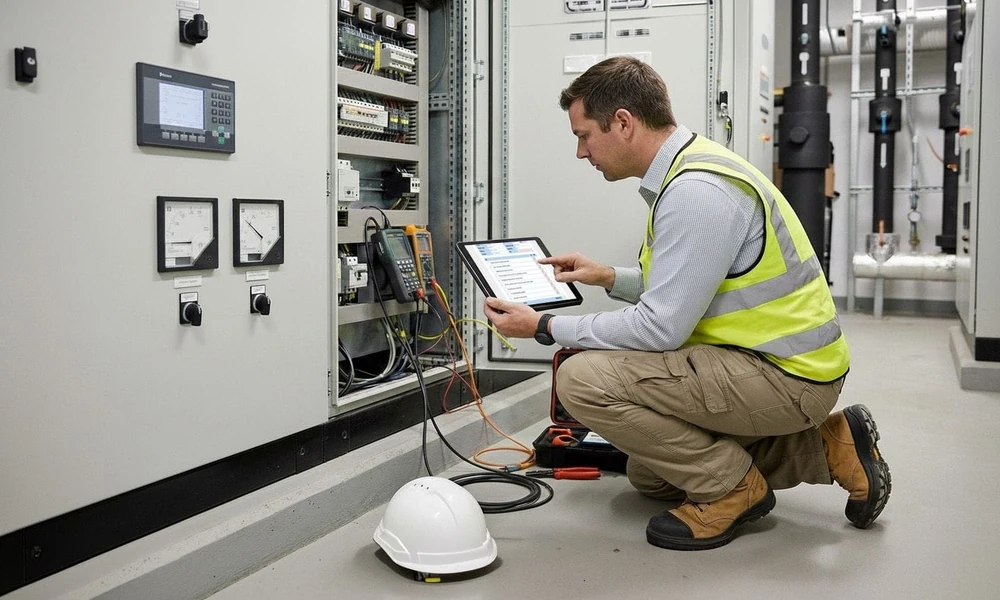

A building can pass inspection yet still fail occupants. Most gaps hide where separate trades meet. Picture a fire alarm that never closes a damper. Structured testing and commissioning services expose such flaws before handover. HVAC, emergency power, and life safety get examined together. Equipment scope, live trials, and documentation each play a part.
Commissioning Scope Covers Every Interacting System
Commissioning targets equipment that reacts to shifting conditions. Static elements like walls rarely need dynamic trials.
- Air handlers must respond to varying loads.
- Chillers and heat pumps should hold setpoints steadily.
- Generators must reach full output in seconds.
- Fire alarms must trigger dampers and fans.
- Lighting controls should follow occupancy schedules.
Why Startup Checks Miss Real Faults?
A startup check confirms a unit switches on. Functional testing asks harder questions. Does the chiller stage correctly at part load? Will the boiler recover after a power dip? Contractors run equipment while an independent agent directs trials. Spinning fans prove little; correct responses prove everything.
Life Safety Sequences Demand Simulated Emergencies
Fire scenarios cannot wait for a real fire. Agents simulate alarms and watch the chain reaction.
- Stairwells must hold positive pressure.
- Smoke dampers should close instantly.
- Air handlers must shut down.
- Lift lobbies need pressurization confirmed.
One failed interlock can fill exits with smoke.
What Happens When Trades Never Coordinate?
Each contractor tests only its own contracted scope. An electrician verifies the transfer switch alone. A controls programmer checks screen graphics separately. Nobody confirms pumps restart in the right sequence. Independent testing and commissioning services own those integration points. Every defect enters a log until retesting closes it.
Can Documentation Outlast the Construction Crew?
Records turn commissioning from opinion into evidence. Trend logs and test sheets form a performance baseline. Years later, facility teams compare current behavior against it. Drift becomes measurable rather than guessed. Seasonal trials matter too; heating faults hide during summer handovers. Operators trained on verified sequences make fewer overrides.
The Damper That Nobody Tested
A smoke damper costs little compared with an entire air handler. Yet that small part decides whether a stairwell stays breathable. Commissioning reframes risk around connections, not components. Expensive equipment arrives tested by its maker. The cheap linkages between systems arrive untested by anyone. Owners funding verification buy confidence in those overlooked joints.
FAQs
When should commissioning begin on a new project?
Ideally during design, when owner requirements get written down. Late starts leave fewer chances to fix flawed sequences cheaply.
Can existing buildings benefit from commissioning?
Yes, retro-commissioning restores older systems toward original performance. Controls drift and overridden setpoints are common findings.
Who performs functional performance tests?
Installing contractors operate the equipment during each trial. An independent agent writes procedures, directs tests, and records results.
How long does commissioning documentation stay useful?
For the full life of the building. Future retrofits, audits, and troubleshooting all rely on that original baseline.
Does commissioning lower long-term energy use?
Yes, verified sequences stop equipment from fighting itself, like simultaneous heating and cooling. Correct setpoints and schedules also trim wasted run hours.
Building Systems Overlooked? Commissioning Provides Structured Testing Across Essential Equipment
