
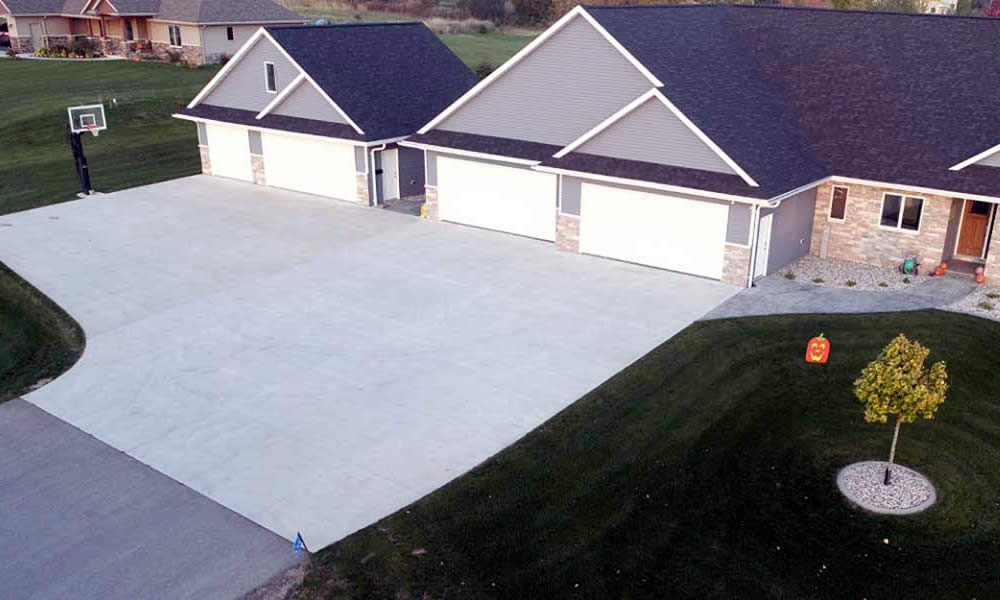

A concrete driveway that gets proper attention at the right intervals holds up far longer than one treated as a set-and-forget surface. The work involved isn’t intensive or expensive, but the timing matters more than most homeowners factor in when they’re thinking about property upkeep. Extended exposure to shifting temperatures highlights how small installation choices influence longevity, a pattern recognised by an established concrete driveway contractor.
Sealing protects everything
New concrete needs its full curing window before any sealer touches the surface. Most contractors hold the 28-day line before that first coat goes down, giving the internal chemical process time to finish without moisture getting locked beneath a sealed layer prematurely. That initial sealer application is what determines how resistant the surface becomes to everything that will land on it across the years ahead.
Letting the sealer wear completely through before reapplying removes the protection at exactly the point the surface needs it most. Staying ahead of that depletion with scheduled reapplication is what keeps the driveway surface in the condition the original installation created. Resealing frequency varies based on several factors that contractors account for:
- Acrylic sealers wear through within one to three years, depending on traffic levels and direct sun exposure
- Penetrating sealers hold effectively for three to five years before reapplication is warranted
- Epoxy and polyurethane coatings last longer between applications but demand more preparation work each time
- Water beading behavior on the surface indicates active sealer protection versus flat absorption signaling depletion
- Spring application timing gives the fresh sealer a full cure window before summer heat and UV exposure arrive
Crack management approach
Water getting into a crack before winter arrives is what turns a minor surface issue into a structural one. Ice forming inside the void generates expansion pressure that forces crack edges apart with each freeze cycle, and that widening compounds progressively through subsequent winters until what started as a hairline becomes a section failure. Filling cracks with appropriate concrete caulk or repair filler in autumn removes that water entry point before freezing temperatures arrive.
An annual surface walk specifically looking for new crack development catches these conditions, while repair materials costing very little still handle them effectively. Contractors who track maintenance records across their client base find a consistent pattern: homeowners who inspect and address cracks at the hairline stage spend a small fraction of what those who wait until cracks are obvious end up paying for repair work over the same period.
Deicing chemical awareness
Rock salt moves ice efficiently and damages concrete surfaces through repeated seasonal application. The chemical reaction of salt drives at the surface layer accelerates scaling and surface breakdown in ways that accumulate across winters, even when individual applications seem harmless. Sand delivers traction on icy surfaces without that chemical trade-off, which is why contractors in colder climates recommend it as the primary winter management tool rather than a supplement to salt.
New driveways need the first winter to be completely free of deicing chemical contact. Concrete’s strength development during that initial curing period is more vulnerable to salt-driven surface scaling than fully matured material, and protecting that first season preserves the surface integrity that the installation itself delivered.
